Saturday, April 16, 2011

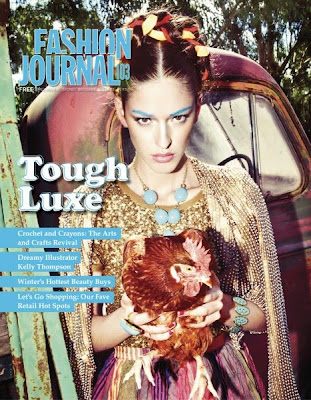
Granny Funk in Fashion Journal - the full scoop!

Here's the full interview from Granny Funk's recent feature in Fashion Journal!


FJ: Why do you think arts and crafts, especially crochet, have come back in such a big way?

GFC: It's an interesting thing, isn't it? I think there's a certain element of nostalgia for a lost past, and I think part of that is that we're so saturated with mass-produced, impersonal consumer objects in our culture that people are starting to say, no, I don't want to be an anonymous consumer. There's a desire for personal difference, certainly, but I think the environmental justice movement has also started to bring the question of ethics into the foreground, and people are starting to ask where things are coming from, what it's costing the earth, and who's being exploited in the process. "Ethical consumerism" is part of that counterculture - but making things for ourselves is probably the strongest way of breaking through that sense of alienation, since it allows for both very personal creative expression and a sense of reconnection with the real costs and joys of making something. Crochet is a very tactile and flexible medium, and I think that fits in with the yearning for connection to real things and with a desire for personal artistic voice.

FJ: How did you learn to crochet? What made you want to teach others to crochet?

GFC: Yes, it's cliche but true - my Grandma taught me. My Dad's from the US and we went on a family trip over there when I was twelve, and she taught me the very basics. I think my first ever project was just long chains which I turned into leashes for two toy lions, and I've picked up a few more skills since then!

My background is in sustainability studies, and it really made me rethink the systems of production we rely upon in our economy. I feel really strongly that we need to re-skill in all that's been lost since just a couple of generations ago and start making things for ourselves again. I've always been a very tactile and artistically-driven person so it made sense that my contribution would be to teach people to use their hands to create practical, beautiful things. It's really satisfying to know that a whole bunch of people now have this skill because of you.

FJ: What kinds of people come to your crochet classes?

GFC: So far it's been mostly women, with a small smattering of gutsy men! Professional women from their twenties to early forties has been my most represented group, and that's confirmed my sense that it's this generation that's really trying to reconnect with practical skills. Sometimes the crochet-unconverted ask me if I'm mostly teaching "grannies" - I tell them no, since the grannies already know everything.

FJ: Can you describe the atmosphere at one of your classes?

GFC: Classes are relaxed and fun! I do lots of classes with beginners, and I know it can be intimidating when you start and you're all fingers and thumbs, so there's no pressure! Each group is different and I've met some lovely people while I've been teaching. I enjoy the way groups can create their own little supportive learning cultures. People continually amaze me, too - someone might spend the first lesson really confused and then bring back a whole bag they've made the next week! I also really enjoy the way each person takes the skill and adapts it to their own sense of aesthetics.

Sunday, April 10, 2011

FEATURED!!!

Granny Funk's been featured in Fashion Journal with a bunch of her lovely (and good-looking!) students - hurrah!! You can find the feature on page 14 of the online version here and posted below (click the article to enlarge)!


Saturday, April 9, 2011

Granny Funk @ Bike Swap Meet

Thanks to those of you who dropped in on Granny Funk at the Bike Swap Meet! It was a fun day with a lovely atmosphere!! Thanks Bike west crew (especially Angelique for some of these pics!!)

x Granny Funk.


Monday, March 14, 2011

Crochet Bike Bling @ Bicycle Swap Meet 26 March


Come one, come all to the Bicycle Swap Meet on the 26th of March at Russell Square! It's part of Cycle Instead Bike Week activities (which you can find out more about at http://www.transport.wa.gov.au/cycling/20025.asp), and Granny Funk will be there from 10am -12pm giving a free beginner's crochet workshop to make curly crochet bike streamers and bike tag swatches - do come by!!! Materials supplied!

x Granny Funk

Monday, December 27, 2010

And A Little Bit of Lace, Too...

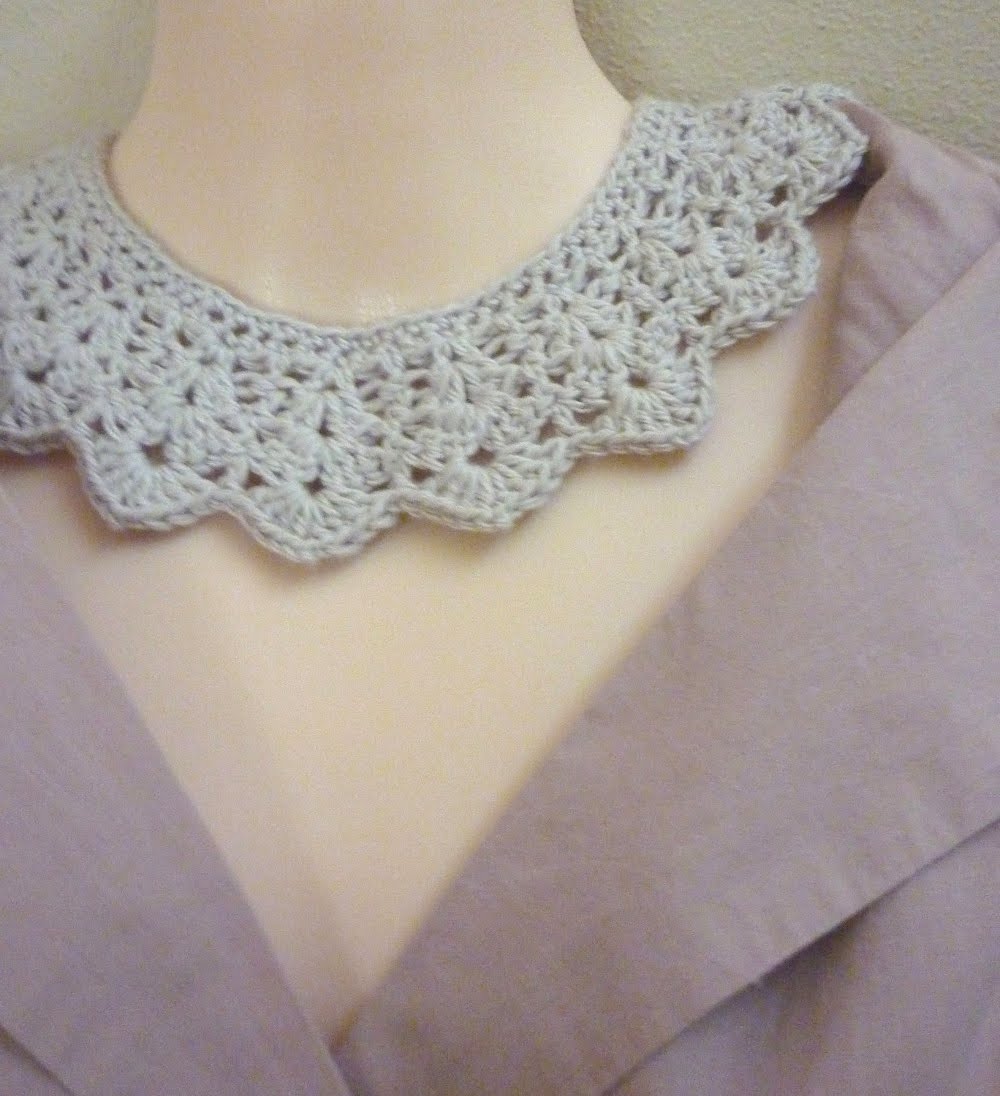
Not wishing to be caught idle over the Christmas break, I decided to forage about the internet for a crochet lace collar pattern - to make something for myself, for a change, and as research for Granny Funk's own soon-to-be-invented crochet collar design. Here's what I made:

You can find the pattern for this collar at The Ongoing Project blog - have a look at the beautiful deep pink they've used there. It's a nice one. I've worked mine in a thicker cotton than they recommend - Bendigo Woollen Mills 8ply cotton, creating a chunkier version. I've also used the pointed-edge variation of the pattern. I'm planning to design one of my own soon - probably with varying sizes of points/scallops.


Happy holidays!

x Granny Funk

Tuesday, December 14, 2010

With a little bitta funk, and a little bitta punk...


Here are some pics of a couple of neck-warmers I had ordered from me recently - the blue one from my stock and the orange and green as a commissioned piece. Perhaps not the season for wool around your neck - but good Christmas presents nonetheless.

Having little button-up neck-warmers appeals to me a lot personally as I tend to get a cold neck in winter but my general poor co-ordination makes a long scarf hanging down around my neck just one more hazard to negotiate. I started exploring button-up scarf creations a few months ago, and it's fun.

The blue scarf on the left is called "Industrial Children", and it's part of my Granny Punk range. I've enjoyed exploring a punk aesthetic, making use of both "pretty" things like lace and flowers together with skull beads, safety pins, and bits of junk like aluminium ring-pulls. I've tried to bring the punk aesthetic into conversation with my own aesthetic, which is substantially earthy. To some degree, a punk aesthetic involves re-appropriation of industrial objects not designed to be decorative, reinvesting them with new meanings - e.g. the safety pin (sociologists and pop culture theorists like to call this bricolage - a concept Michel de Certeau talks about in his book The Practice of Everyday Life).

As a would-be critic of industrial society, this renegade reclamation of industrial wares appeals to me. I like that industrial junk can be re-appropriated as beauty - there is a sense of resistance in that. My own hope is that we can move even further - not only re-appropriating as our own the pre-determined products of an industrial economy, but beginning to shape for ourselves the very forms of the things we produce. Incorporating junk bits into a handmade, earthy scarf is something of that to me - combining the creative abilities needed to make use - and beauty - of what we already have, with the visionary creativity needed to move toward something altogether different. I guess that's what "Industrial Children" is about - my hope for my own generation to re-imagine that which we already have and which has grown stale in our hands, and to prophetically imagine a future which is altogether different.

I'm happy she's found an owner! Here's another picture:

The second piece, you'll be relieved to hear, is invested with no meaning so profound. It's called "As Chance Would Have It", and it's about...green, and orange, and bright buttons, and I hope it's going make to make someone smile. To make up for the lack of profundity, I'll just swamp you with pictures:


x Granny Funk

Monday, November 8, 2010

Granny Funk and the Crochet Hook VS Miles and the Screwdriver


When I was a kid, my parents read us a story called Miles and the Screwdriver. It follows the antics of an obsessively inquisitive child named Miles who acquires a screwdriver and begins taking things apart, just to see how they work. It begins with a simple pencil sharpener and quickly escalates into screwdriver-crazed destruction, until Miles by some means unclear makes it to the north pole and the very big screw which holds the whole world together. He is interrupted at this point by God, who points out the obvious impending consequences but overall turns out to be a good sport and gives Miles a chance to atone for his sins through a goodly dose of the Protestant work ethic, repairing everything he has thus far disassembled. No minor task, since that included much of the known world (even as a kid I was skeptical about the importance of screws in so many major historical buildings, but my construction-adept father said nothing).

I recently found myself in somewhat the opposite position to Miles – trying to put something back together to see how it worked. I was repairing this beautiful crochet blanket.


It was the first time I have attempted a major repair on a piece of someone else's work, and an interesting experience since the ability to “read” stitches is pushed to a whole new level when you have a disintegrating tangle before you and have to work out how to rework sections that have unravelled and yet still have other stitches trying to attach themselves to whatever's left. I had assumed I would have to add in extra cotton, but didn't since what had unravelled had initially been enough.

It's interesting trying to puzzle out a construction technique that's different from the form of crochet I know. In the end my work was a good approximation but not the same method, since the original stitches seemed to be trebles with some kind of double-twist in them I couldn't explain (if anyone knows the name of this, let me know!).

It felt good to repair something so beautiful, and it made me reflect upon our tendency to throw things away rather than repair them. Despite a common assumption that materialism underpins consumer capitalism, the prolific generation of material objects – often of dubious quality – trains us to not value any one thing in particular, since everything is replaceable and in fact, consumerism depends upon our desire to replace what we have. Reconstructing another person's handiwork is a kind of participation in, and renewal of, a creative process started by someone else, a kind of passing of the baton of beauty. The labour of restoration says “This is beautiful, and it is enough”.

I'm unclear about the final moral of Miles and the Screwdriver. Certainly in my own family, the tendency to take things apart has always been linked to the the quest for understanding in order to repair and create. But certainly deconstruction is easier than repair or creation, on the moral and intellectual planes as well as the material one.

I hope whatever I choose to pull apart is eventually in the service of repair – repair of blankets and of human society. Post-industrial visionary that I am, though, I am uncomfortable with the idea that the world is held together by a screw. I would suggest instead a dovetail join, right in the centre of the earth.